Electronics & e-waste
Electronics and TV removal in Dallas
Old screens and dead computers accumulate faster than anything else in a house, and they are exactly the category you should not put in a bin.
Prefer to talk it through?(214) 234-3063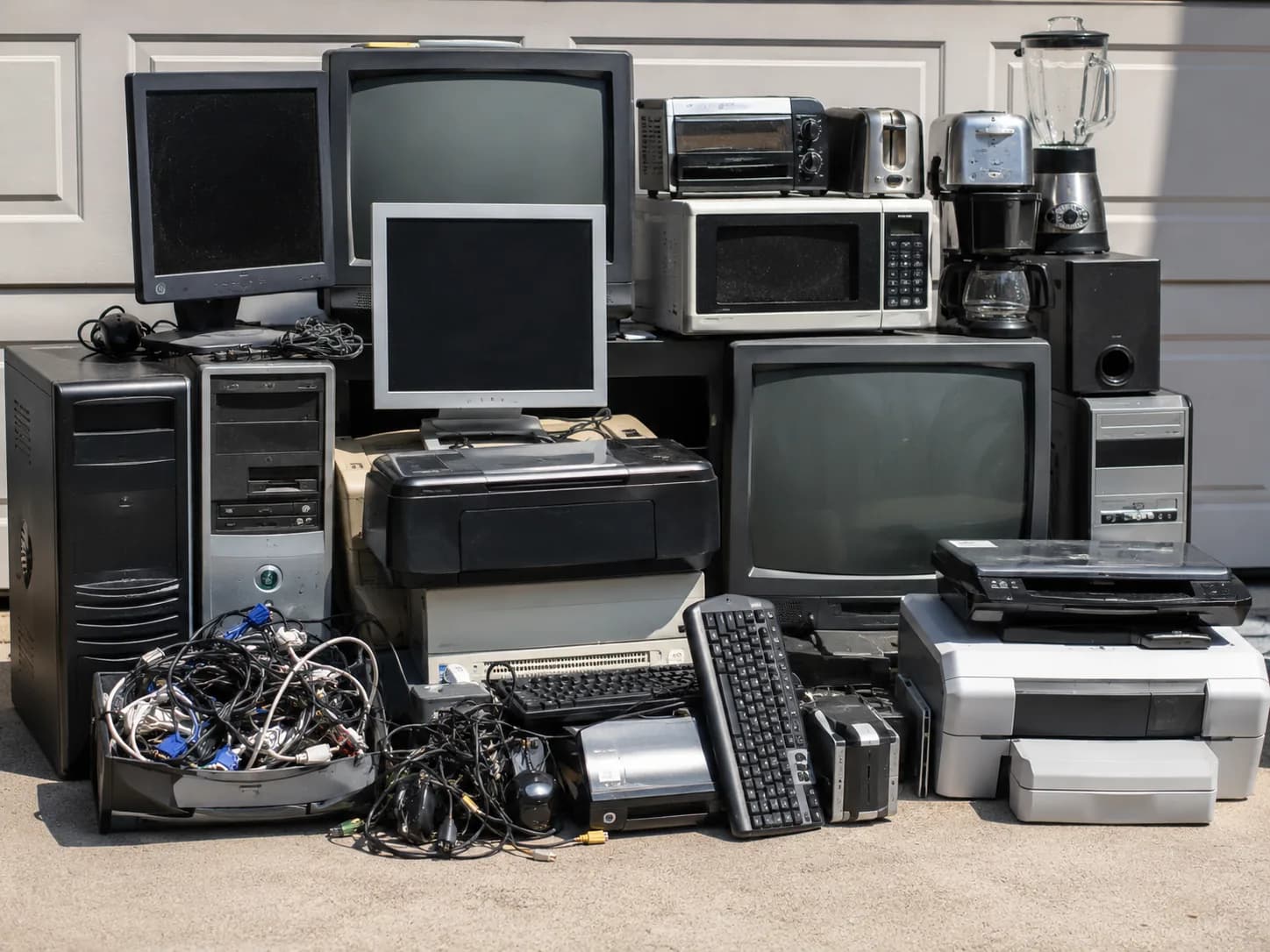
E-waste is the fastest-growing pile in most homes
Every upgrade leaves a survivor. The TV that got replaced but was too good to throw out, the desktop from two jobs ago, a printer that jammed permanently in 2019, and a drawer of cables nobody can identify. None of it is big enough on its own to force a decision, so it stays — usually in a closet, a garage, or under a desk.
Electronics also should not go in general waste, and in most cases it is against the rules to put them there. Screens, circuit boards and batteries contain lead, mercury, cadmium and lithium, which is precisely what landfill regulations exist to keep out of the ground. Old CRT televisions are the clearest example: heavy, full of leaded glass, and refused by most collection services for exactly that reason.
The practical consequence is that e-waste gets separated from the rest of a load and sent down an electronics recycling route rather than a general disposal one. That is also why some items in this category carry a disposal fee where a piece of furniture the same size would not.
What we take
Screens, boxes and everything with a plug
- Televisions — CRT, plasma, LCD and LED
- Monitors, desktops, laptops and servers
- Printers, scanners, copiers and fax machines
- Stereo equipment, speakers and amplifiers
- Games consoles and controllers
- Cables, chargers, keyboards and peripherals
- Routers, modems and networking gear
- Small kitchen and household electronics
Your data
Wipe your drives before they leave the house
Recycling a computer is not the same as erasing it. A drive pulled from a scrapped machine is still readable, and a junk removal crew is not a data destruction service — nor should you rely on any hauler who tells you otherwise.
If a device held anything personal or commercial, wipe it or physically remove the drive before pickup. For a desktop that usually means opening one panel and unscrewing a caddy; for a laptop it is a few screws underneath. A removed drive is easy to destroy at home with a drill through the platters, and it costs nothing.
For business equipment with a compliance obligation attached, use a certified data destruction provider for the drives and let us take the hardware afterwards. That order matters: the certificate covers the drive, not the chassis.
- Wipe or remove drives before collection
- Deauthorize and sign out of accounts on smart TVs
- Remove memory cards from cameras and printers
- Take batteries out of anything that has removable ones

Clearing out a home office?
Screens, towers, printers and the cable drawer can all go in one trip — and the desk with them.
Awkward categories
The items other services turn down
CRT televisions
Heavy, leaded glass, and expensive to process — which is why so many haulers refuse them. We take them; a disposal fee may apply and is shown before you confirm.
Wall-mounted screens
Taking the set off the bracket is part of the pickup. Mention it at booking for anything large or mounted high.
Batteries
Household batteries and battery-containing devices go with an electronics load. Large lead-acid and damaged or swollen lithium batteries need a different route — flag those.
Printers with cartridges
Leave the cartridges in. They are separated during processing, and pulling them out usually just makes a mess of your carpet.
Keep looking
Related services
Appliance removal
Fridges, washers, dryers and dishwashers.
Learn moreOffice cleanouts
IT equipment at business scale.
Learn moreGarage junk removal
Where the old equipment usually ends up.
Learn moreItems we take
The full list, and what we cannot accept.
Learn moreHome cleanouts
Whole-property clearing.
Learn moreGuide: where your junk ends up
How a load is sorted after it leaves.
Learn moreFAQ
Questions Dallas customers ask
Do you take old CRT televisions?
Yes. They are among the most commonly refused items elsewhere, because the leaded glass makes them expensive to process. A disposal fee may apply, and it is shown in your estimate before you confirm.
Will my data be destroyed?
No — treat pickup as recycling, not data destruction. Wipe drives or remove them before the crew arrives. For regulated business data, use a certified destruction service for the drives and we will take the hardware afterwards.
Can you take a wall-mounted TV down?
Yes, taking it off the bracket is part of the pickup. Mention it when you book, particularly for anything large or mounted high, so the crew brings the right hands and tools.
Do you collect batteries?
Household batteries and battery-containing devices such as laptops and power tools can go with an electronics load. Large lead-acid batteries and damaged or swollen lithium batteries are handled differently — flag those when booking.
Is there a limit on how many items?
No. A single television is a routine booking, and so is a garage full of accumulated equipment. Volume is priced the same way as anything else, and electronics pack densely so a large quantity often takes less room than people expect.
What actually happens to the equipment?
It goes to an electronics recycling route rather than general disposal, where the metals, plastics and boards are separated for recovery. Working equipment in good condition is routed for reuse where there is somewhere to take it.
Ready when you are
Clear the e-waste pile
Book a pickup online and get the screens, towers and cables out in one trip.
Or call(214) 234-3063