Appliance removal
Appliance removal in Dallas
A dead refrigerator is the single most annoying object in a house. Too heavy to move, too big to store, and not something the bin service will look at.
Prefer to talk it through?(214) 234-3063
What we take
Large and small appliances
Working or dead — condition changes where it goes afterwards, not whether we will take it.
- Refrigerators and freezers
- Washing machines and tumble dryers
- Dishwashers
- Ovens, ranges and cooktops
- Microwaves and countertop appliances
- Water heaters
- Air conditioners and window units
- Trash compactors and garbage disposals
- Dehumidifiers and air purifiers
- Wine coolers and beverage fridges
Why appliances are handled differently from furniture
Appliances are not just heavy — several categories are regulated. Refrigerators, freezers, air conditioners and dehumidifiers contain refrigerant that cannot legally be released to the atmosphere, which is why they have to go to a facility equipped to recover it rather than into a general load.
That is also why some appliances carry a disposal fee where others do not. If a fee applies to your item it is built into the estimate before you confirm the booking, so the number you agree is the number you pay.
The rest is more straightforward. Appliances are mostly steel, aluminum and copper, and those have a well-established scrap route. A dead washing machine is worth considerably more as material than it is as an obstacle in your garage, which is part of why appliance removal tends to price well relative to its weight.
What crews will not do is disconnect anything hard-wired or gas-fed. That is not caution for its own sake: a junk removal crew uncoupling a gas range is a genuine risk to your property, and it is work for a licensed trade.
Before the crew arrives
Empty and defrost
Clear food from fridges and freezers, and defrost if you can — meltwater in transit is messy.
Disconnect where safe
Unplug and shut off the water supply to washers and dishwashers if you are comfortable doing so.
Leave the hard-wired ones
Anything hard-wired or gas-connected should be disconnected by a qualified trade first.
Tell us the floor
Appliances coming down stairs need the right crew size assigned in advance.
Clear the path
A fridge needs a wider route out than you would expect, especially through a turn.
Getting a new appliance delivered?
Retail delivery teams often will not take the old unit, or will only take it from the same room. Book the haul-away separately and it is handled either way.
The garage fridge
The second refrigerator nobody uses
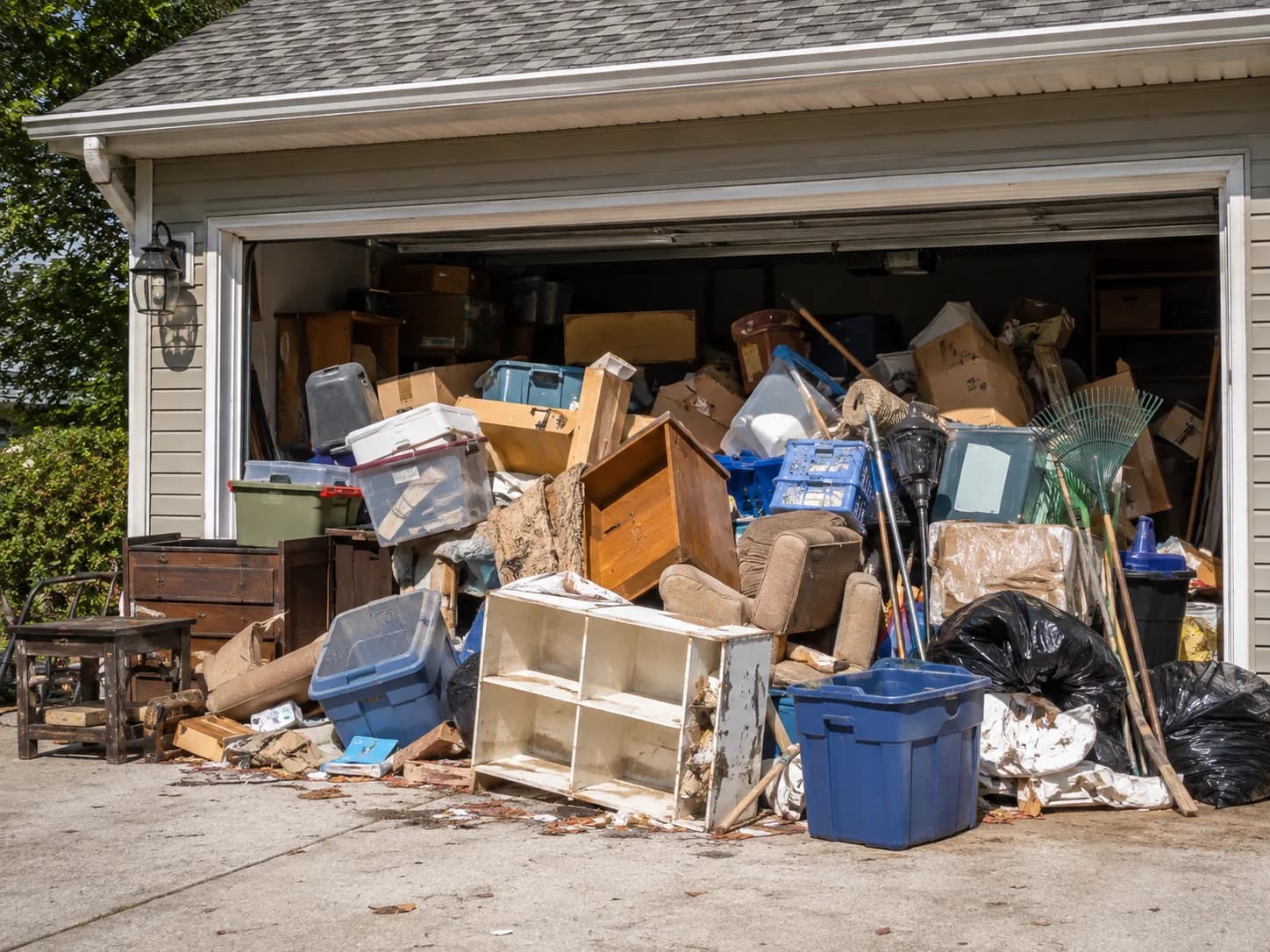
The most common appliance call in Dallas is not a broken kitchen unit — it is the spare refrigerator in the garage. It was kept for drinks, or for holidays, and it has been running for years cooling almost nothing at a cost that quietly exceeds what it would take to replace.
An unconditioned Dallas garage is a brutal place for a compressor. Summer temperatures well above a hundred degrees mean the unit runs far harder than one in a kitchen, which is why garage fridges tend to fail early and why so many of them end up unplugged and simply left in place.
Whether it is running or not, it comes out the same way. If it has been unplugged for a while, open it and air it out a day or two before pickup — a sealed fridge that has been off in the heat is genuinely unpleasant to move.
Keep looking
Related services
Electronics & TV removal
Screens, computers and small electronics.
Learn moreGarage junk removal
Where the old appliance has been living.
Learn moreBulk item removal
Single heavy items, handled.
Learn moreRental cleanouts
Tenant-left appliances between turnovers.
Learn moreItems we take
What goes on the truck and what cannot.
Learn moreHow pricing works
Where disposal fees come in.
Learn moreFAQ
Questions Dallas customers ask
Do you disconnect the appliance for me?
Simple disconnections — unplugging, uncoupling a washer hose with the supply shut off — are part of the job. Anything hard-wired into the electrical supply or connected to a gas line needs a qualified electrician or plumber first; a junk removal crew disconnecting a gas range is not a risk worth taking.
Will you take a refrigerator that still works?
Yes. A working appliance in reasonable condition has a better route available than scrap, and that is preferred where there is somewhere local to take it.
Is there an extra charge for appliances?
Sometimes. Items containing refrigerant have a recovery and disposal cost attached, and where that applies it appears in your estimate before you confirm. Most other appliances are priced on volume like anything else.
Can you get a fridge out of a basement or upstairs kitchen?
Yes — appliances come out of second-floor apartments and awkward kitchens regularly. Flag the access when you book so the crew arrives with enough hands and the right equipment.
Do you take water heaters?
Yes, once disconnected. Gas water heaters must be disconnected by a qualified trade before removal; electric units should be isolated and drained. A drained tank is also considerably lighter to carry.
What happens to the appliance afterwards?
Refrigerant-containing units go to a facility that recovers the refrigerant before the metal is processed. Everything else is largely steel, aluminum and copper and goes to scrap recycling. Working appliances in good condition are routed for reuse where possible.
Ready when you are
Get the old appliance out
Book a pickup slot online, or send a photo and get a price back first.
Or call(214) 234-3063