Dallas junk removal guide
What happens to junk after it is removed?
A truck full of junk is rarely a truck full of rubbish. Here is how a load is actually separated, and what decides which route each item takes.
4 min read
It is a fair question to ask a hauler, and a fair one to be skeptical about — plenty of companies talk about recycling without ever saying what it means in practice. So here is the honest version, including its limits.
Sorting happens as the truck is loaded
The separation does not begin at a facility; it begins on your driveway. As the crew carries items out they are staged and grouped: metal in one place, electronics in another, anything obviously usable kept clear of the crush. Loading a truck without that discipline makes the load impossible to separate later.
It is also why a mixed load costs more to process than a uniform one, and why describing what is in a job up front produces a better estimate.
Route one: donation and resale
Furniture in usable condition, working appliances, unopened household goods and serviceable office furniture are worth more to somebody else than to a landfill. Where there is a local organization able to take an item, that is where it goes.
The limit is condition, and it is stricter than people expect. Upholstered furniture that is torn, soaked, smoke-damaged or infested cannot be donated — no charity can resell it, and offering it anyway simply transfers the disposal cost to them.
Route two: recycling
- Metal. Appliances, bed frames, shelving, racking and machinery are largely steel, aluminum and copper, all with an established scrap market. This is the highest-volume recycling stream in most loads.
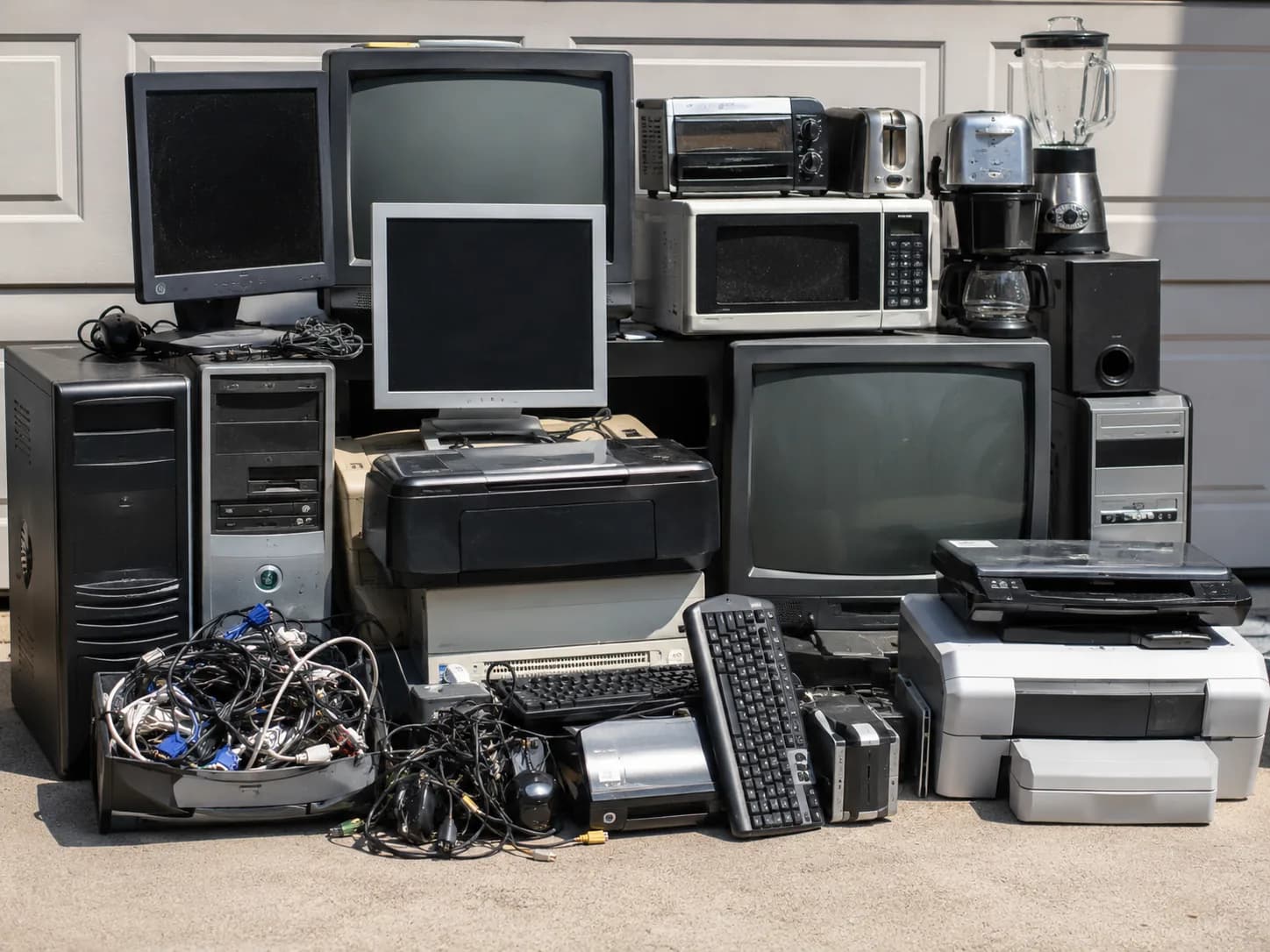
- Electronics. Screens, computers, printers and small devices go down an e-waste route rather than general disposal, because the boards and batteries contain exactly what landfill rules exist to keep out.
- Cardboard and clean plastic film. Bulky, light and genuinely recyclable at volume — which is most of what a post-move load consists of.
- Mattresses. Steel, foam, fiber and timber are separable at a facility equipped for it.
- Green waste. Clean brush and clippings have composting and mulching routes, though a load mixed with fencing or treated timber does not.
Route three: disposal
What is left goes to landfill, and being straight about that matters more than a percentage claim nobody can verify. Broken upholstered furniture, contaminated material, mixed construction waste and anything too degraded to recover ends up here. The aim is that it is the remainder rather than the default.
What never goes on the truck
Hazardous material is a separate system entirely: paint, solvents, oils, fuel, pesticides, pool chemicals, propane cylinders, car batteries and anything containing asbestos. These need a licensed hazardous waste route, which for a Dallas household means a hazardous waste drop-off.
A hauler who agrees to take those without comment is not doing you a favor — they are creating a disposal problem that remains, ultimately, traceable to you.
What you can do to improve the outcome
Separate anything genuinely usable before the crew arrives and say so. Keep chemicals out of the pile. And if a specific charity matters to you, mention it when booking — where they accept the items, the load can be routed accordingly.
Book a pickup that gets sorted, not just hauled
Book online, or send photos and get a price back first.
Written by the Junk Koala Dallas team. Serving Dallas, Garland, Mesquite, Richardson, Addison and Farmers Branch.
All articlesReady when you are
See it happen with your own load
Book a pickup and what leaves your property is sorted the way this article describes rather than driven straight to a tip.
Or call(214) 234-3063